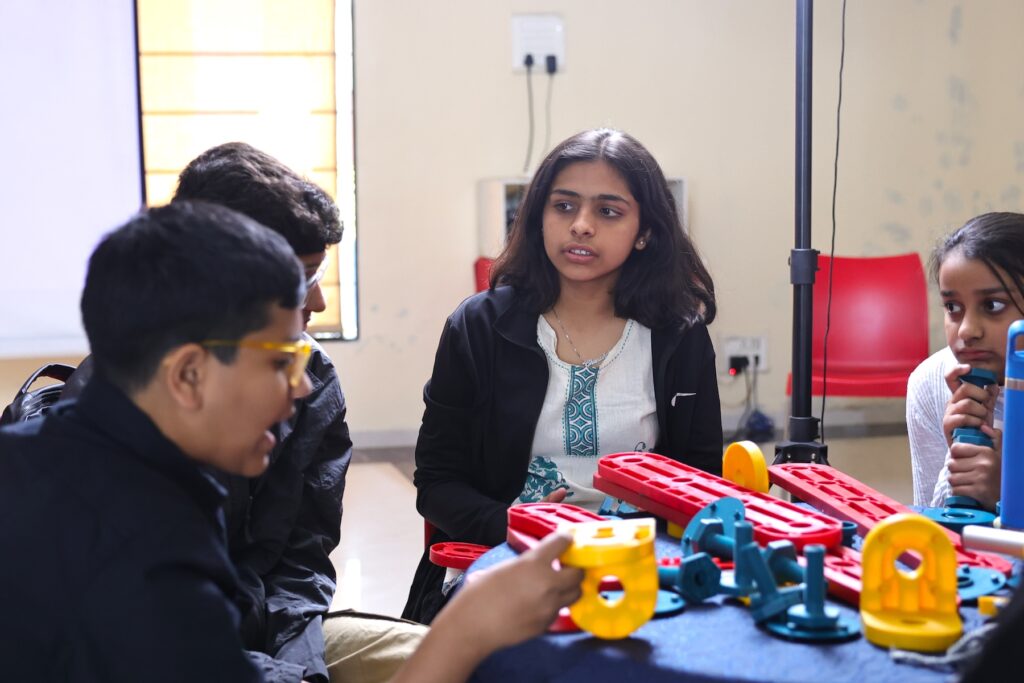

Our Ethos: The heart of HOAG
What we stand For At HOAG, we prepare young minds between ages 11 and 22 to think with clarity, act with responsibility and face complexity with confidence. Our ethos ensures that every student grows in both capability and character. They learn resilience by engaging with challenge, honesty by confronting their own thinking and the discipline needed to lead themselves and others with maturity.
Our ethical pillars
Psychological Safety
A learning environment where students feel safe to speak up, make mistakes, and take risks without fear of judgment.
- Failure is treated as information that guides improvement, rather than a source of shame.
- Students are encouraged to try, experiment and iterate because growth requires exploration.
- We maintain high academic and behavioral standards while providing the emotional support students need to meet those standards.
Intellectual Honesty
A commitment to truth, clarity, and authenticity, even when it’s uncomfortable.
- Students learn to say “I do not know yet” with confidence because honesty is the beginning of knowledge.
- Ideas are challenged rigorously without attacking individuals so that discussions remain productive and respectful.
- Curiosity and humility are rewarded because they create thinkers who can learn continuously.
Collaborative Responsibility
A culture where leadership is shared, and success is built collectively rather than individually.
- Students practice empathy, teamwork and emotional awareness because effective collaboration requires understanding others as much as oneself.
- Success is never measured at the cost of the group, which shapes students to value collective progress over individual competition.
- Leadership is defined as serving the team and enabling others, which helps young people develop habits that translate into responsible adult behavior.
Our Ethos: The heart of HOAG
What we stand For At HOAG, we prepare young minds between ages 11 and 22 to think with clarity, act with responsibility and face complexity with confidence. Our ethos ensures that every student grows in both capability and character. They learn resilience by engaging with challenge, honesty by confronting their own thinking and the discipline needed to lead themselves and others with maturity.
Psychological Safety
A learning environment where students feel safe to speak up, make mistakes, and take risks without fear of judgment.
- Failure is treated as information that guides improvement, rather than a source of shame.
- Students are encouraged to try, experiment and iterate because growth requires exploration.
- We maintain high academic and behavioral standards while providing the emotional support students need to meet those standards.
Intellectual Honesty
A commitment to truth, clarity, and authenticity, even when it’s uncomfortable.
- Students learn to say “I do not know yet” with confidence because honesty is the beginning of knowledge.
- Ideas are challenged rigorously without attacking individuals so that discussions remain productive and respectful.
- Curiosity and humility are rewarded because they create thinkers who can learn continuously.
Collaborative Responsibility
A culture where leadership is shared, and success is built collectively rather than individually.
- Students practice empathy, teamwork and emotional awareness because effective collaboration requires understanding others as much as oneself.
- Success is never measured at the cost of the group, which shapes students to value collective progress over individual competition.
- Leadership is defined as serving the team and enabling others, which helps young people develop habits that translate into responsible adult behavior.
The Deep Learning Arc
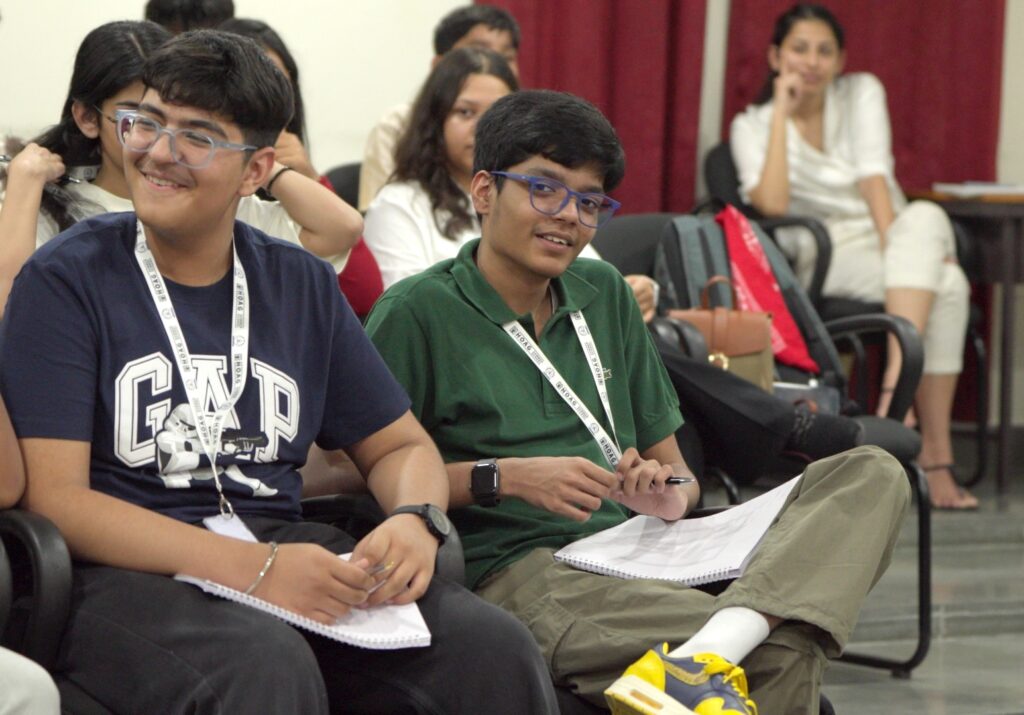
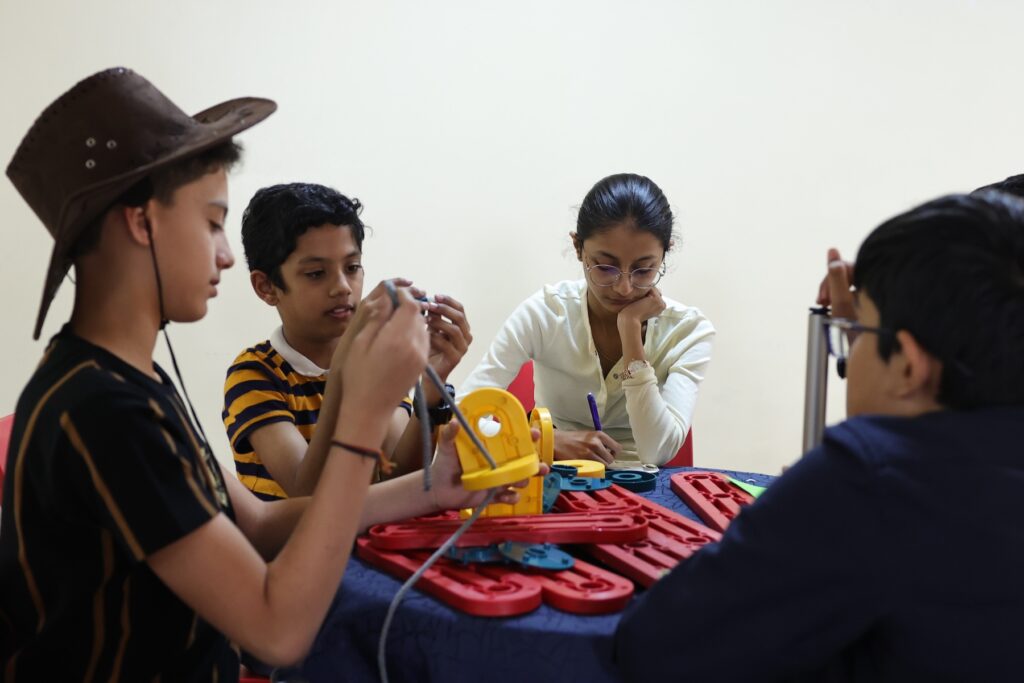
Constructive Disruption
Students begin with immersive challenges where answers are not immediately available. This deliberate uncertainty helps them recognize the limits of their knowledge and develop an authentic desire to learn.
Inquiry Framework
We teach through questions rather than lectures because inquiry strengthens reasoning. Students learn to analyze information, evaluate perspectives and synthesize ideas. This reflects the way learning happens in leading global classrooms.
Metacognition
Students are taught to reflect on their own thinking. They learn to identify what strategies worked, what did not and how to apply those insights to future situations. This develops self awareness and the ability to transfer learning into real life.
Call 1800 833 8271
For any kind of admission enquiry.
Global Standards and Mentorship
Our methodology is benchmarked against global best practices and endorsed by iHub Divyasampark, IIT Roorkee.
Mentors, Not Teachers
The adults at HOAG are intentionally positioned as mentors rather than traditional teachers. Their role is not to deliver information. Their role is to model judgment, reasoning and ethical behavior. Students learn best by observing how experienced professionals think, communicate and make decisions. This mentorship based approach gives them a realistic preview of how high performing teams operate in universities and workplaces.
Our mentors come from diverse fields and bring a depth of experience that students can trust. They ask questions that challenge assumptions, guide students through complex problems and help them reflect on their choices. They encourage independent thinking rather than providing quick answers. They treat students with respect and seriousness, which raises the standard for how students see themselves. Over time, students internalize responsible and thoughtful leadership because they see it modeled consistently.

Why this matters
Young people are entering a world that is uncertain, fast changing and filled with complexity. Information shifts quickly. Careers evolve. Opportunities appear and disappear. In this environment, simply scoring well or memorizing answers does not prepare a child for real life.
Students need the ability to think independently, adapt under pressure, work across cultures and make sound decisions. They need strong internal anchors that help them stay stable when things get difficult.
This is why the HOAG ethos matters. Psychological safety helps students approach challenges without fear. Intellectual honesty teaches them to confront reality with clarity. Collaborative responsibility ensures they learn to work with and support others instead of competing at all costs.
These are not soft skills. They are the core abilities that allow young people to lead themselves, contribute meaningfully and navigate future uncertainty with confidence. When students develop these qualities early, they step into the world prepared, grounded and capable of shaping their own path.